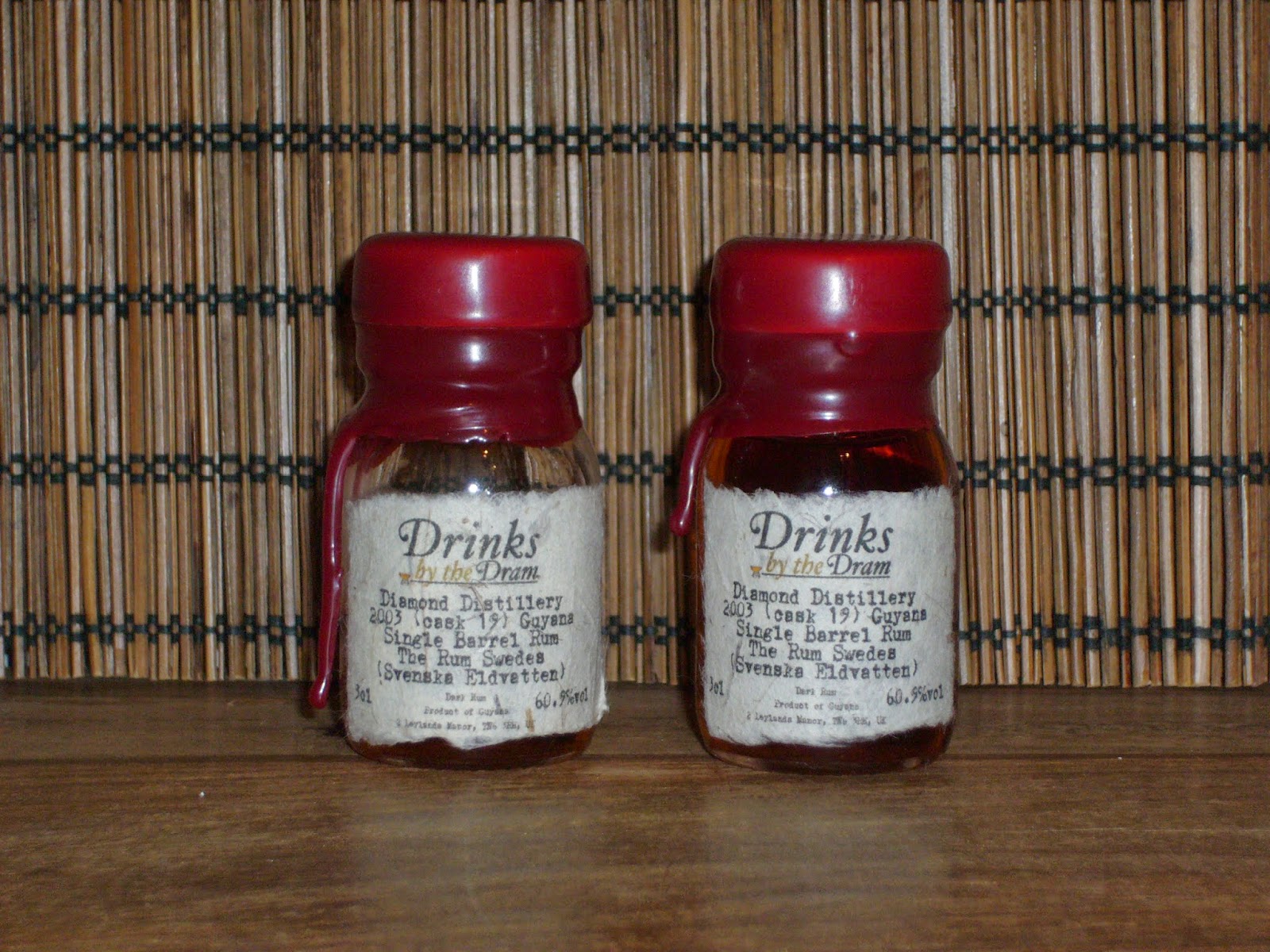
(the English version is below ; just skip the German part)
Wieder einmal Servus und Hallo auf B.A.M.!
Wieder einmal möchte ich einen Rum aus Guyana vorstellen. Von diesem Abfüller hatte ich bisher nicht viele Rums. Allerdings hatte er auch bisher noch nicht viele Rum-Abfüllungen in seiner Geschichte. Die Rede ist vom TheRumSwedes Diamond Distillery (Port Mourant) 2002 11YO.
Zur Abfüllung:
 |
| Quelle: masterofmalt.com |
Hinter dieser Abfüllung steckt also der schwedische Abfüller „The Rum Swedes“ (Svenska Eldvatten). Zu diesem Abfüller habe ich bereits bei meinem Review des The Rum Swedes Barbados WIRD (Rockley) 11 YO einige Sätze geschrieben. Dies ist mein dritter Rum der Serie. Der zweite Rum war der The Rum Swedes Diamond Distillery 2003 10 YO. Besonders der Rum aus Barbados war ein richtig guter Rum, hatte aber leider einen sehr hohen Preis, bedingt durch die schwedischen Steuern und den Export ins Ausland. MastersofMalt.com ist dort der einzige Anbieter in UK, welcher diese Rums außerhalb Schwedens anbietet. In Frankreich ist es mit Excellencerhum.com ein weiterer Anbieter der seit mindestens letzten Jahres diese Rums auch in seinem Sortiment führt. Aber auch dort sind die Preise recht gesalzen. Der Grund hierfür ist derselbe, wie bei MastersofMalt.com. Dieser Rum aus Schweden wurde in der Port Mourant Double Vat Still destilliert. Diese soll angeblich bis auf das Jahr 1732 zurückzuführen sein. Auf welche Quellen sich Ddl bezieht ist mir leider nicht bekannt, aber das Port Mourant Anwesen ist definitiv nicht so alt, wie ich bereits ausführlich in meinem Artikel zu den Destillerien in Guyana geschrieben und auch bewiesen habe. Diese Abfüllung ist ein neuer Jahrgang der Port Mourant Still nach der Verlagerung zur Diamond Distillery im Jahre 2000 mit der Schließung der Uitvlugt Distillery. Nur noch Rum-Fässer verblieben dort in einer Art Warenlager, oder besser gesagt, dem vermutlich ehemaligen Lagerhaus der Uitvlugt Distillery.
Was sagt uns der Jahrgang? Es gab den Mezan Diamond Distillery aus 2002 und ist eventuell aus demselben Batch und dürfte somit auch aus dieser Still stammen. Auch der Silver Seal Diamond Distillery 2002 11 YO (2002 – 2014) (50%) kommt aus diesem Batch. Bisher gibt es nach meinem Kenntnisstand nur diese drei Abfüllungen aus diesem noch relativ jungen Jahrgang. Ob es noch weitere Rums aus 2002 geben wird muss die Zeit zeigen. Auch im Jahre 2003 wurden Fässer mit Rum aus Port Mourant gekauft. Wie groß die Vorräte in UK oder Europa sind und ob sie dem Bedarf in den nächsten Jahren auch gerecht werden, bleibt noch abzuwarten. Aber die bloße Tatsache, das die Anzahl der Abfüllungen in den letzten Jahren gestiegen ist, lässt mich an potenzielle alte Rums aus diesen Jahrgängen zweifeln. Entweder ein Käufer wird diese mit voller Absicht aus diesem Grund zur Seite legen, was aber eigentlich für viele Jahre gebundenes Kapital wäre, oder, die wahrscheinlichste Variante, es wird verkauft was da ist und auch auf den Markt geworfen. Vielleicht liege ich ja auch einfach falsch und in 10 Jahren wird es einen an die 20 Jahre alten Rum aus diesen beiden Jahrgängen (2002 & 2003) aus dieser Still geben. Wer weiß. Diese Abfüllung aus Schweden umfasste 245 Flaschen und entsprang dem Fass #6. Damit veröffentlichte The Rum Swedes insgesamt bisher 6 Rum-Abfüllungen (1xBarbados, 2xTrinidad, 2xGuyana und 1xJamaica). Zumindest kenne ich nur diese sechs Stück. Eine „Eintagsfliege“ im Rum-Business? Warten wir mal ab was die Zukunft noch so mit sich bringt. ;)
-----------------------------------------------------------------------------------------------------
Verkostung The Rum Swedes Diamond Distillery (Port Mourant) 2002 11YO:
Preis: Der Preis rangiert von 109 – 118€ für eine 0,7l Flasche. Mit einem schwächeren Euro dürfte der Preis vielleicht noch ein wenig weiter steigen.
Alter: Ein offizielles Alter ist mir nicht bekannt. Der Rum dürfte aber 11 Jahre alt sein.
Alkoholstärke: Die Abfüllung wurde mit 61,0%vol abgefüllt. Dies dürfte noch die volle Fassstärke sein. Nicht viele Abfüller wagen eine solche Trinkstärke. Hier ziehe ich meinen Hut vor den Schweden für diese Entscheidung.
Destillationsverfahren: Die Port Mourant Double Wooden Pot Still (Vat Still). Diese Information ist auf dem Label angegeben.
Farbe: Der Rum erstrahlt in einem blassen Goldton. Ein wenig intensiver wie Weißwein. Für 11 Jahre war das Fass wohl nicht mehr sehr aktiv, aber immer noch aktiver als andere Abfüllungen.
Viskosität: Dünne Schlieren formen sich an der Glaswand und auch vereinzelte Perlen, welche an der Glaswand haften bleiben. Die Öligkeit ist zwar vorhanden, ich bleibe allerdings noch etwas skeptisch.
%2B2002%2B11YO%2BGlas.JPG) Nase: Ich ließ den Rum für mehr als eine halbe Stunde lang im Glas atmen. Ich rieche die für Port Mourant berühmten Anisaromen, garniert von einer wunderschönen Fruchtigkeit und eine dezenten Süße. Ich rieche Mangos, Papayas und auch einen schwachen Hauch von Birnen. Außerdem rieche ich eine ganz ganz minimal esterhaltige Nuance im Glas. Durchsetzt wird die Frucht von zurückhaltenden Eichenaromen vom Fass und Gewürzen, wie z.B. Nelken. Der Alkohol brennt angenehm sehr tief in der Nase und ist für meine Verhältnisse überhaupt nicht dominant ausgeprägt. Da hatte ich schon wesentlich rauere Rums im Glas. Lassen sie sich aber bitte hiervon nicht täuschen. Der Rum hat schließlich 61%vol(!). Der sonst auch übliche schwarze Tee ist fast gar nicht vorhanden und eher zurückhaltend im Hintergrund des gesamten Profils. In der Nase kann dieser Rum überzeugen. Die hohe Trinkstärke dürfte allerdings viele Käufer abschrecken.
Nase: Ich ließ den Rum für mehr als eine halbe Stunde lang im Glas atmen. Ich rieche die für Port Mourant berühmten Anisaromen, garniert von einer wunderschönen Fruchtigkeit und eine dezenten Süße. Ich rieche Mangos, Papayas und auch einen schwachen Hauch von Birnen. Außerdem rieche ich eine ganz ganz minimal esterhaltige Nuance im Glas. Durchsetzt wird die Frucht von zurückhaltenden Eichenaromen vom Fass und Gewürzen, wie z.B. Nelken. Der Alkohol brennt angenehm sehr tief in der Nase und ist für meine Verhältnisse überhaupt nicht dominant ausgeprägt. Da hatte ich schon wesentlich rauere Rums im Glas. Lassen sie sich aber bitte hiervon nicht täuschen. Der Rum hat schließlich 61%vol(!). Der sonst auch übliche schwarze Tee ist fast gar nicht vorhanden und eher zurückhaltend im Hintergrund des gesamten Profils. In der Nase kann dieser Rum überzeugen. Die hohe Trinkstärke dürfte allerdings viele Käufer abschrecken.%2B2002%2B11YO%2BGlas%2B2.JPG) Gaumen: Der Alkohol brennt zuerst ein wenig beim ersten Schluck und nach einigen Sekunden ein wenig mehr. Die Süße ist dezent und weniger intensiv wie in der Nase, aber doch vorhanden. Ein ganz wunderbarer Einfluss der amerikanischen Weißeiche. Ich schmecke nur geringe Eichenaromen. Der Rum schmeckt ähnlich krass wie zuvor in der Nase. Die Fruchtigkeit ist sehr gut ausgeprägt und wird von den Anisaromen gut kombiniert. Wieder schmecke ich Mangos und Papayas. Auch einen ganz schwachen Hauch Birnen kann ich erkennen. Nach einigen Sekunden verliert der Rum deutlich am Kraft und der Alkohol brennt fast gar nicht mehr. Beim zweiten Schluck brennt der Alkohol nun sehr deutlich. Jetzt merkt man die 61% deutlich. Dieser Rum ist unverdünnt nichts für Anfänger. Der Speichel braucht einige Zeit bis er den Rum am Gaumen verdünnt hat und das Brennen nachgelassen hat. Nun schmecke ich auch neben dem Anis und der wunderschönen Frucht einen Hauch Tabak neben den Nelken. Der Rum hat keinerlei Bitterkeit, allerdings verblasst die Süße immer mehr je länger man den Rum im Mund zirkulieren lässt.
Gaumen: Der Alkohol brennt zuerst ein wenig beim ersten Schluck und nach einigen Sekunden ein wenig mehr. Die Süße ist dezent und weniger intensiv wie in der Nase, aber doch vorhanden. Ein ganz wunderbarer Einfluss der amerikanischen Weißeiche. Ich schmecke nur geringe Eichenaromen. Der Rum schmeckt ähnlich krass wie zuvor in der Nase. Die Fruchtigkeit ist sehr gut ausgeprägt und wird von den Anisaromen gut kombiniert. Wieder schmecke ich Mangos und Papayas. Auch einen ganz schwachen Hauch Birnen kann ich erkennen. Nach einigen Sekunden verliert der Rum deutlich am Kraft und der Alkohol brennt fast gar nicht mehr. Beim zweiten Schluck brennt der Alkohol nun sehr deutlich. Jetzt merkt man die 61% deutlich. Dieser Rum ist unverdünnt nichts für Anfänger. Der Speichel braucht einige Zeit bis er den Rum am Gaumen verdünnt hat und das Brennen nachgelassen hat. Nun schmecke ich auch neben dem Anis und der wunderschönen Frucht einen Hauch Tabak neben den Nelken. Der Rum hat keinerlei Bitterkeit, allerdings verblasst die Süße immer mehr je länger man den Rum im Mund zirkulieren lässt.
Abgang: Der Abgang beginnt mit einer Kombination aus Anis, Frucht und einem Hauch Tabak. Nach einiger Zeit gesellen sich Gewürze in Form von Nelken und Eichenaromen hinzu. Die Frucht bleibt sehr lange am Gaumen verweilen, aber die Mangoaromen beginnen die Papayas immer mehr zu verdrängen. Ein ganz schwacher Hauch von schwarzem Tee huscht über den Gaumen. Der Rum hat keinerlei Bitterkeit im Abgang. Der Fasseinfluss war sehr gut.
-----------------------------------------------------------------------------------------------------
%2B2002%2B11YO%2BGlas%2B3.JPG) Fazit: Ein sehr guter Demerara Rum mit leider zwei Nachteilen. Der Erste wäre der hohe Preis. Durch die Einfuhr nach Schweden wurde die Abfüllung schon teuer. Möchte nun ein Importeur außerhalb Schwedens noch ein wenig Gewinn machen wird dieser Preis noch ein bisschen weiter nach oben geschraubt. Der zweite Nachteil wäre die hohe Trinkstärke. Während für mich diese kein Problem mehr darstellt und ich auch gern mit einer Pipette und Wasser hantiere, so gibt es doch viele Käufer dort draußen, die nicht an solche Trinkstärken gewöhnt sind und auch nicht mit Wasser verdünnen wollen oder können. Abgesehen von diesem „Gejammere“ hat der Rum eine hohe Qualität und konnte mich definitiv überzeugen. Die Reife und Geschmacksvielfalt ist definitiv in größeren Mengen in der Nase und am Gaumen vorhanden, als vergleichsweise beim Duncan Taylor Diamond Distillery (Port Mourant) 2003 10 YO (Cask 72). Zugegeben: es handelt sich hier um ein anderes Batch und einen anderen Jahrgang. Der Stil (Port Mourant) ist aber bei beiden Abfüllungen derselbe. Das Fass hatte aber den Rum nicht mehr wahnsinnig viel bei seiner Reife helfen können. Hier war der Einfluss größer. Selbst mit vier zusätzlichen Jahren wäre die Reife wohl nicht an den neuen Port Mourant Rum von Bristol Spirits Limited herangekommen, der für eine perfekte Reife früher das Fass hätte verlassen müssen. Allerdings und das muss man so auch einmal sagen, gibt es keinen perfekten Rum. Selbst wenn es ihn gebe: Was definiert ihn? Im Grund doch der jeweilige Käufer oder Connaisseur mit seiner individuellen Sichtweise und Geschmacksvorlieben selbst. Ich zum Beispiel mag einen gemäßigten bis ordentlichen Fasseinfluss im Glas. Andere Connaisseure oder Blogger dagegen nicht. Diese tendieren eher zu unreifen Rums oder, das andere Extrem, sie bevorzugen holzige Rums. Für jeden ist ein perfekter Rum jeweils etwas anderes. Aber ich denke ich schweife ab.
Fazit: Ein sehr guter Demerara Rum mit leider zwei Nachteilen. Der Erste wäre der hohe Preis. Durch die Einfuhr nach Schweden wurde die Abfüllung schon teuer. Möchte nun ein Importeur außerhalb Schwedens noch ein wenig Gewinn machen wird dieser Preis noch ein bisschen weiter nach oben geschraubt. Der zweite Nachteil wäre die hohe Trinkstärke. Während für mich diese kein Problem mehr darstellt und ich auch gern mit einer Pipette und Wasser hantiere, so gibt es doch viele Käufer dort draußen, die nicht an solche Trinkstärken gewöhnt sind und auch nicht mit Wasser verdünnen wollen oder können. Abgesehen von diesem „Gejammere“ hat der Rum eine hohe Qualität und konnte mich definitiv überzeugen. Die Reife und Geschmacksvielfalt ist definitiv in größeren Mengen in der Nase und am Gaumen vorhanden, als vergleichsweise beim Duncan Taylor Diamond Distillery (Port Mourant) 2003 10 YO (Cask 72). Zugegeben: es handelt sich hier um ein anderes Batch und einen anderen Jahrgang. Der Stil (Port Mourant) ist aber bei beiden Abfüllungen derselbe. Das Fass hatte aber den Rum nicht mehr wahnsinnig viel bei seiner Reife helfen können. Hier war der Einfluss größer. Selbst mit vier zusätzlichen Jahren wäre die Reife wohl nicht an den neuen Port Mourant Rum von Bristol Spirits Limited herangekommen, der für eine perfekte Reife früher das Fass hätte verlassen müssen. Allerdings und das muss man so auch einmal sagen, gibt es keinen perfekten Rum. Selbst wenn es ihn gebe: Was definiert ihn? Im Grund doch der jeweilige Käufer oder Connaisseur mit seiner individuellen Sichtweise und Geschmacksvorlieben selbst. Ich zum Beispiel mag einen gemäßigten bis ordentlichen Fasseinfluss im Glas. Andere Connaisseure oder Blogger dagegen nicht. Diese tendieren eher zu unreifen Rums oder, das andere Extrem, sie bevorzugen holzige Rums. Für jeden ist ein perfekter Rum jeweils etwas anderes. Aber ich denke ich schweife ab.
Noch einmal: Die Qualität ist hoch anzusiedeln. Allerdings erschwert sein Auftritt auf den Markt sein hoher Preis und die limitierte Verfügbarkeit außerhalb Schwedens. Allerdings habe ich den Eindruck, dass dieser letzte Punkt dem Abfüller herzlich egal sein dürfte. Der Rum war denke ich hauptsächlich für schwedische Genießer abgefüllt worden und nicht für knausrige Deutsche oder Schotten. Mit der vergleichsweise billigeren Konkurrenz aus England wird er es ohnehin schwer haben. Zwar sind die jeweiligen Abfüllungen, die Port Morant (Mourant) Rums von John Barrett und diese Abfüllung, von der Reife und der Trinkstärke her nicht identisch, aber der Stil ist doch derselbe. Der Silver Seal Diamond Distillery 2002 11 YO mit 50% ist allerdings noch ein wenig teurer als der Schwede (und das ohne hohe Importsteuer). Ob er diesen Unterschied rechtfertigt kann ich nicht sagen, da ich ihn noch nicht im Glas hatte. Ob Sie diesen Rum aus Schweden brauchen müssen Sie wie immer selbst entscheiden. Schließlich müssen Sie für ihre Geld arbeiten. Vielleicht bei einer Flaschenteilung? Dann muss man keine ganze Flasche kaufen um feststellen zu können, ob dieser Rum etwas für den eigenen Geschmack ist oder nicht. Ich wünsche euch noch einen schönen Sonntag.
Marco
-----------------------------------------------------------------------------------------------------
Hello and welcome to B.A.M.!
Once again I would like to present a rum from Guyana. I did not have much bottlings from this IB but this seems to be fine, because this bottler had up until now not many rum bottlings released on the market. Todays review will be about the TheRumSwedes Diamond Distillery (Port Mourant) 2002 11YO.
The Bottling:
|
| Source: masterofmalt.com |
“Responsible” for this bottling is the Swedish bottler 'The Rum Swedes "(Svenska Eldvatten). I already did write a few lines about this bottler in my review of the The Rum Swedes Barbados WIRD (Rockley) 11 YO. This is my third rum of this bottler. The second was the Rum Distillery The Rum Swedes Diamond Distillery 2003 10 YO. Especially the rum from Barbados was a really good rum, but unfortunately had a very high price due to the Swedish taxes and the export abroad. MastersofMalt.com is the only supplier in the UK, which offers this rum outside of Sweden. In France it is Excellencerhum.com. Last year this shop also offered rum from this Swedish bottler. But the prices are a little bit... high. The reason for this is the same as in MastersofMalt.com. This rum from Sweden was distilled in the Port Mourant Double Vat Still. This still is supposed to be created along with the distillery in the year 1732. I have no idea on which sources this statement is based or on which source DDL is referring to, but the Port Mourant estate is definitely not established in the said year. I've already written about this topic in my article of the distilleries in Guyana. This bottling is a new vintage coming of Port Mourant Still, after it was moved to the Diamond distillery in 2000. In this very year the Uitvlugt Distillery was closed down for good. Only the rum barrels remained in a kind of warehouse, which seems to be the old storage of the closed Uitvlugt distillery. Everything else went to Diamond.
What does the vintage tells us? There were some other bottlings from 2002. There was the Mezan Diamond Distillery 2002. This bottling must come from the same batch as this bottling from Sweden. Also, the Silver Seal Diamond Distillery 2002 11 YO (2002-2014) (50%) comes from this batch. So far, to the best of my knowledge, there are only these three bottlings coming from this batch produced with the Port Mourant double vat still. It is a relatively new one. Only the time will show us if there are more rums from this vintage or not. Only the importer(s) will know how many they have bought in the said year. They were also some barrels with rum from the Port Mourant still purchased in 2003. The stock of this vintage is also unknown. It seems that the importer(s) are only buying on demand when there is some free room in their respective warehouse. Meaning: When the demand for barrels is low, then they are buying not much. Why should they? Only there mere fact that this demand seems to be have increased in the past few years gives hope that we might see more rums coming from this new vintages. Does this also mean we will see really old rums again like the from the vintage 1975? I doubt it. At least not unless a buyer is purchasing a few barrels for exactly this purpose. But why should a bottler do this? That would be too much money bound for a very long time and you could not get access to that money unless you want to give up this goal of creating old rums. The recent releases are hinting to an increasing and steady demand for middle-age rums. This demand will prevent the stocking of rums for this kind of purpose. Maybe I'm wrong and we all will see 20 year old rums from these new vintages. Who knows. These are just mythoughts. This bottling from Sweden consisted of 245 bottles which came from the cask #6. So far “The Rum Rum Swedes” released 6 different rum bottlings on the market (1xBarbados, 2xTrinidad, 2xGuyana and 1xJamaica). Or should I rather say: I do only know these six bottlings. Is this only a “flash in the pan” or a new rum bottler who wants to stay in the business? I guess we will have to wait and see. ;)
------------------------------------------------------------------------------------------------------
Tasting The Rum Swedes Diamond Distillery (Port Mourant) 2002 11YO:
Price: The price is ranked bewteen 109 to 118 € for a 0.7l bottle. With a weaker euro the price might be higher in the future.
Age: An official age is not known to me. But the rum is likely to be 11 years old.
ABV: The rum was bottled with 61.0%abv. This is probably the full cask strength. Not many bottlers dare bottle a rum in such a drinking strength. I take my hat off for this decision.
Process of distillation: The Port Mourant double wooden pot still (vat still). This information is stated on the label.
Colour: The rum shines in a pale golden colour. A little more intense than white wine. For 11 years, the barrel was probably not very active, but still more active than other bottlings.
Viscosity: Thin streaks are forming and scattered pearls of rum stick to the glass wall. The oiliness is good, but I remain skeptical.
+2002+11YO+Glas.JPG) Nose: I let breathe the rum for more than half an hour in the glass. I smell the famous Port Mourant aniseed aromas, topped by a beautiful fruitiness and a subtle sweetness. I also smell mangoes, papayas and even a faint hint of pear. There is also a very very minimal ester-containing nuance in the glass. The fruit is interspersed with restrained oak flavors from the barrel and spices, such as cloves. The alcohol burns very pleasant deep into the nose and is not very dominant present by my standards. Since I already had much rougher rum in the glass. But please do not be fooled thereof. The rum has powerfull 61% abv (!).The usual black tea is almost non-existent and rather reserved in the background of the entire flavour-profile. The nose of the rum was very good. However, the high drinking strength is likely to deter many buyers.
Nose: I let breathe the rum for more than half an hour in the glass. I smell the famous Port Mourant aniseed aromas, topped by a beautiful fruitiness and a subtle sweetness. I also smell mangoes, papayas and even a faint hint of pear. There is also a very very minimal ester-containing nuance in the glass. The fruit is interspersed with restrained oak flavors from the barrel and spices, such as cloves. The alcohol burns very pleasant deep into the nose and is not very dominant present by my standards. Since I already had much rougher rum in the glass. But please do not be fooled thereof. The rum has powerfull 61% abv (!).The usual black tea is almost non-existent and rather reserved in the background of the entire flavour-profile. The nose of the rum was very good. However, the high drinking strength is likely to deter many buyers.+2002+11YO+Glas+2.JPG) Palate: The alcohol burns at first not extremely in first sip, but gains power after a few seconds. The sweetness is subtle and less intense as in the nose, but still present. A very wonderful influence of American white oak. I taste only minimal oak flavours. The Rum tastes similar as before smelled in the nose. The fruitiness is very strong and is well combined with aniseed. Again I taste mangos and papayas. There is also a faint hint of pears. After a few further seconds the rum clearly has lost a lot of his power and the alcohol burns is almost "gentle" on the palate. However, with the second sip the rum rushes in with full force. Now you clearly notice the 61%abv.This rum is undiluted not for beginners. The saliva needs some time until it has diluted the rum on the palate to ease the burning sensation of the alcohol.Now I recognize a hint of tobacco in addition to the cloves. The rum has no bitterness at all, but the sweetness fades more and more out the longer you circulate the rum in your mouth.
Palate: The alcohol burns at first not extremely in first sip, but gains power after a few seconds. The sweetness is subtle and less intense as in the nose, but still present. A very wonderful influence of American white oak. I taste only minimal oak flavours. The Rum tastes similar as before smelled in the nose. The fruitiness is very strong and is well combined with aniseed. Again I taste mangos and papayas. There is also a faint hint of pears. After a few further seconds the rum clearly has lost a lot of his power and the alcohol burns is almost "gentle" on the palate. However, with the second sip the rum rushes in with full force. Now you clearly notice the 61%abv.This rum is undiluted not for beginners. The saliva needs some time until it has diluted the rum on the palate to ease the burning sensation of the alcohol.Now I recognize a hint of tobacco in addition to the cloves. The rum has no bitterness at all, but the sweetness fades more and more out the longer you circulate the rum in your mouth.
Finish: The finish starts with a combination of anise, fruit and a hint of tobacco. After some time, oak flavors and spices are joining in the form of clove. The fruit lingers on and on, but the mango flavours begin to push away the papayas. A very faint hint of black tea is rushing over the palate. The rum has also no bitterness in the finish. The barrel influence was very good.
---------------------------------------------------------------------------------------------
+2002+11YO+Glas+3.JPG) Conclusion: A very good Demerara rum with, unfortunately, two disadvantages. The first one would be the high price. Due to the entry into Sweden the bottling was already very expensive. A potential importer outside of Sweden, which do want to make a little money, will also pu a fair share on the price. The second one is, as odd as it may sound coming out of my mouth, the drinking strength. While i like to work with water and a pipette, there are many buyers out there who are not accustomed to such drinking strengths and do not want to dilute with water. Apart from this "whining" the Rum has a high quality and did convince me. The maturity and flavour variety is definitely present in large quantities in the nose and on the palate compared with the Duncan Taylor Diamond Distillery (Port Mourant) 2003 10 YO (Cask 72).Admittedly, these are from different batches and vintages. But the style (Port Mourant) of the two bottlings is the same. The barrel influence differed also. The DT was not improved much by the barrel while this one from Sweden had a greater influence. Even with four additional years the maturity of this bottling would still not be on the same level as the new bottling from Bristol Spirits Limited. But the new PM bottling from John Barrett was also not a perfect rum and should have left the bottling a few years earlier. However, a perfect rum does not exist. Anyway, what defines a perfect rum? That depends on the respective buyer or connoisseur with its own individual ideals for a rum and his/hers taste preferences. Every person has its "own" definition of a perfect rum. But I think I digress from the topic.
Conclusion: A very good Demerara rum with, unfortunately, two disadvantages. The first one would be the high price. Due to the entry into Sweden the bottling was already very expensive. A potential importer outside of Sweden, which do want to make a little money, will also pu a fair share on the price. The second one is, as odd as it may sound coming out of my mouth, the drinking strength. While i like to work with water and a pipette, there are many buyers out there who are not accustomed to such drinking strengths and do not want to dilute with water. Apart from this "whining" the Rum has a high quality and did convince me. The maturity and flavour variety is definitely present in large quantities in the nose and on the palate compared with the Duncan Taylor Diamond Distillery (Port Mourant) 2003 10 YO (Cask 72).Admittedly, these are from different batches and vintages. But the style (Port Mourant) of the two bottlings is the same. The barrel influence differed also. The DT was not improved much by the barrel while this one from Sweden had a greater influence. Even with four additional years the maturity of this bottling would still not be on the same level as the new bottling from Bristol Spirits Limited. But the new PM bottling from John Barrett was also not a perfect rum and should have left the bottling a few years earlier. However, a perfect rum does not exist. Anyway, what defines a perfect rum? That depends on the respective buyer or connoisseur with its own individual ideals for a rum and his/hers taste preferences. Every person has its "own" definition of a perfect rum. But I think I digress from the topic.
Again, the quality of this bottling is high. However, his start on the market was not a easy one because of its high price and limited availability outside of Sweden. Anyway, I get the impression that the bottler won't give a damn to the last point (availability). The rums were bottled for Swedish lovers and not for stingy German or Scots. With the comparatively cheaper competition from England it will be difficult anyway. Although the respective bottlings with Port Morant (Mourant) on the label bottled by John Barrett are not identical in terms of maturity and drinking strength, but the style is still the same.The Silver Seal Diamond Distillery 2002 11 YO 50%, however, is a little more expensive than the Swede (and without the high import tax). Whether he justifies this difference or not I can not say because I have not had it in the glass. The decision of buying this rum from Sweden is your own choice, as always. Because it is you who has to work for the needed money. Perhaps a bottle sharing? Then you would not need to buy a whole bottle in order to determine whether this rum suits your taste or not. I wish you all a nice Sunday.
Marco
PS I am currently working on translating some older reviews. I know that they are not “hot and new” anymore but for the sake of Information I want to spare you guys the use of the Google-Translator. I know that it sucks badly and the results are... quite funny and are sometimes not really representing my opinion correctly. But it will need some time. Just stay tuned guys.